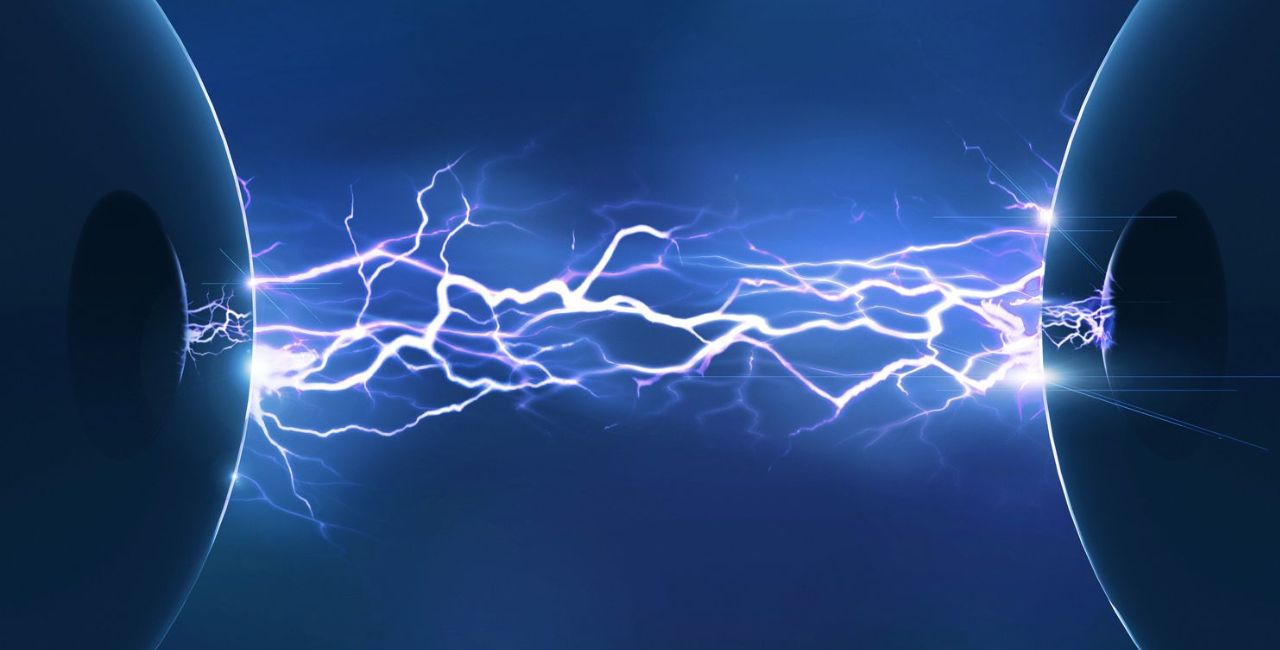
Electric Charge and Force form the cornerstone of electromagnetism, shaping everything from the spark we feel when touching a doorknob to the complex operations of electronic devices that power our daily lives. These fundamental ideas explain how matter interacts at the subatomic level and influence countless phenomena in nature and engineering. This detailed exploration delves into the history, mathematics, practical uses, and future possibilities of these concepts, providing clear explanations suitable for beginners and deeper insights for advanced learners.
Historical Development of Understanding Electric Charge and Force
The journey to comprehend electric charge and force dates back thousands of years. Ancient civilizations observed mysterious effects, such as the attraction of amber to lightweight objects after rubbing, but lacked scientific frameworks. In the 17th and 18th centuries, pioneers like William Gilbert and Benjamin Franklin laid groundwork through careful experiments. Franklin’s famous kite experiment during a thunderstorm demonstrated that lightning carries an electric charge, linking natural events to laboratory observations.
By the late 18th century, Charles-Augustin de Coulomb conducted precise measurements using a torsion balance. His work established the quantitative relationship between charges and the force they exert. This period marked a shift from qualitative descriptions to mathematical precision, influencing later giants like Michael Faraday and James Clerk Maxwell, who unified electricity and magnetism.
These historical milestones highlight how persistent inquiry transformed vague observations into a robust scientific discipline. Early researchers faced challenges with rudimentary tools, yet their dedication paved the way for modern physics. Today, we benefit from their insights in fields ranging from renewable energy to medical imaging, underscoring the timeless relevance of studying electric charge and force.
Basic Concepts of Electric Charge
At its core, electric charge is an intrinsic property of matter carried by protons and electrons. Protons possess a positive charge, while electrons carry an equal but negative charge. Neutrons remain neutral. The smallest unit of charge, known as the elementary charge (e), equals approximately 1.602 × 10⁻¹⁹ coulombs.
Charges interact according to a simple rule: like charges repel, and unlike charges attract. This principle governs atomic structure, where electrons orbit positively charged nuclei. Charge is conserved; it can neither be created nor destroyed, only transferred. This conservation law explains why objects become charged through friction, conduction, or induction.
Types of Charges: Positive and Negative
Positive charge arises from a deficiency of electrons, while negative charge results from an excess. In everyday scenarios, rubbing a balloon on hair transfers electrons, charging the balloon negatively and the hair positively. The resulting attraction demonstrates the force at work.
Conservation of Charge and Quantization
Charge quantization means it occurs in discrete multiples of the elementary charge. This concept, confirmed through experiments like Millikan’s oil-drop experiment, shows nature’s preference for fundamental building blocks. Understanding these basics equips us to explore more complex interactions.
The Force Between Charges: Coulomb’s Law
The quantitative description of the force between two stationary charges is known as Coulomb’s law. It states that the magnitude of the electrostatic force is directly proportional to the product of the magnitudes of the charges and inversely proportional to the square of the distance between them. Mathematically, this is expressed as:
F=k∣q1q2∣r2 F = k \frac{|q_1 q_2|}{r^2}
where F F is the force, q1 q_1 and q2 q_2 are the charges, r r is the distance, and k k is Coulomb’s constant (approximately 8.99 × 10⁹ N·m²/C²).
This inverse-square relationship mirrors gravitational force but operates on vastly different strength scales. For point charges, the force acts along the line joining them. Direction depends on charge signs: repulsive for same signs, attractive for opposite.
Derivation and Vector Form
To derive the vector form, consider two charges in space. The force vector F⃗ \vec{F} on charge q2 q_2 due to q1 q_1 is:
F⃗=kq1q2r2r^ \vec{F} = k \frac{q_1 q_2}{r^2} \hat{r}
Here, r^ \hat{r} is the unit vector from q1 q_1 to q2 q_2 . This formulation allows calculations in three dimensions, essential for complex charge distributions.
Practical Examples and Calculations
Imagine two 1-microcoulomb charges separated by 1 meter. The force calculates to about 9 × 10³ newtons—roughly the weight of a small car—illustrating the strength of electrostatic forces at close range. Step-by-step problem-solving involves identifying values, applying the formula, and considering units for consistency.
Coulomb’s law extends to multiple charges using superposition: the net force is the vector sum of individual forces. This principle underlies analyses of charged arrays in capacitors and atomic models.
Electric Fields and Their Role
An electric field represents the region around a charge where another charge experiences a force. Defined as the force per unit positive test charge, the electric field E⃗ \vec{E} at a point is:
E⃗=F⃗q0 \vec{E} = \frac{\vec{F}}{q_0}
where q0 q_0 is a small positive test charge.
Field lines visualize these fields: they originate from positive charges and terminate on negative ones, never crossing. The density of lines indicates field strength.
Calculating Electric Fields
For a point charge, the field is:
E=kqr2 E = k \frac{q}{r^2}
directed radially outward for positive charges. Continuous distributions, like a charged rod or plate, require integration techniques. Gauss’s law simplifies symmetric cases:
∮E⃗⋅dA⃗=Qenclϵ0 \oint \vec{E} \cdot d\vec{A} = \frac{Q_{\text{encl}}}{\epsilon_0}
This relation connects flux through a closed surface to enclosed charge, proving invaluable for infinite planes or spheres.
Electric fields influence conductors and insulators differently. In conductors, charges rearrange until the internal field vanishes, enabling shielding applications like Faraday cages.
Electric Potential and Energy
Electric potential energy arises from the configuration of charges. For two point charges, it is:
U=kq1q2r U = k \frac{q_1 q_2}{r}
The potential difference, or voltage, measures work per unit charge to move a test charge between points:
V=−∫E⃗⋅dl⃗ V = -\int \vec{E} \cdot d\vec{l}
Equipotential surfaces are perpendicular to field lines. These concepts explain capacitor function, where energy storage is:
U=12CV2 U = \frac{1}{2} C V^2
Applications in Daily Life
Electric charge and force manifest in numerous familiar ways. Static cling in clothes results from charge transfer during tumbling. Lightning occurs when charge separation in clouds overcomes air resistance, discharging billions of joules.
Household devices rely on these principles. Photocopiers use charged drums to attract toner. Printers and air filters employ electrostatic precipitation to remove particles. Even the spark from a lighter involves charge buildup and discharge.
In medicine, electrocardiograms detect electrical signals from heart muscle, while defibrillators deliver controlled charges to restore rhythm. These examples show how foundational physics improves health and convenience.
For deeper insights into related electrical systems, explore electric circuits, which build directly on charge movement and force principles.
Industrial and Technological Uses
Industries harness electric charge and force for efficiency. Electrostatic painting ensures even coating on metal surfaces by charging paint particles. Textile manufacturing uses similar techniques for fiber alignment.
In energy sectors, capacitors store charge for power conditioning. High-voltage transmission lines manage fields to minimize losses. Emerging technologies, including advanced batteries, rely on ion movement driven by electric forces.
Modern electronics depend on controlled charge flow in semiconductors. Transistors switch using field effects, enabling microprocessors. For innovations in energy storage tied to these concepts, consider advancements in battery technology and related innovations.
Experiments and Demonstrations
Classroom experiments vividly illustrate these ideas. The Van de Graaff generator builds high charges, producing dramatic sparks. Electroscopes detect charge presence through leaf divergence.
Quantitative labs measure Coulomb’s law using sensitive balances or digital sensors. Simulations with software allow visualization of fields without physical setups. Safety remains paramount when handling high voltages.
Advanced Topics: From Classical to Quantum Perspectives
Classical electrostatics suffices for macroscopic scales, yet quantum mechanics reveals deeper layers. Electrons exhibit wave-particle duality, and quantum electrodynamics describes photon-mediated forces.
In materials science, dielectrics polarize under fields, increasing capacitance. Superconductors expel fields completely (Meissner effect). Relativistic corrections apply at high speeds, though everyday phenomena remain Newtonian.
Plasma physics studies ionized gases where charges move freely, relevant to fusion research and auroras. These frontiers connect electric charge and force to cutting-edge pursuits like particle accelerators.
Environmental and Sustainable Aspects
Sustainable technologies leverage these principles for clean energy. Solar panels generate charge separation via the photovoltaic effect. Wind turbines and hydroelectric systems indirectly use electromagnetic induction rooted in charge dynamics.
Electrostatic precipitators reduce industrial emissions, promoting cleaner air. Research into efficient charge storage supports electric vehicles and grid stability, contributing to reduced fossil fuel dependence. Educational programs emphasize responsible innovation, aligning scientific progress with environmental stewardship.
Educational Importance and Future Prospects
Mastering electric charge and force equips learners with analytical skills transferable across disciplines. Curriculum integration fosters critical thinking through problem-solving and experimentation.
Future prospects include nanoscale devices, quantum computing, and bioelectric interfaces. As technology evolves, these concepts will drive breakthroughs in communication, computing, and energy.
Delving deeper into Electric Charge and Force reveals intricate connections across physics branches, from classical laws to quantum applications, inspiring ongoing research and innovation worldwide.
Conclusion
this exploration demonstrates the profound influence of electric charge and force on our understanding of the universe and technological advancement. Continued study promises further discoveries, benefiting society through enhanced knowledge and practical solutions. Whether for academic pursuits or personal curiosity, these principles offer endless fascination and utility.


