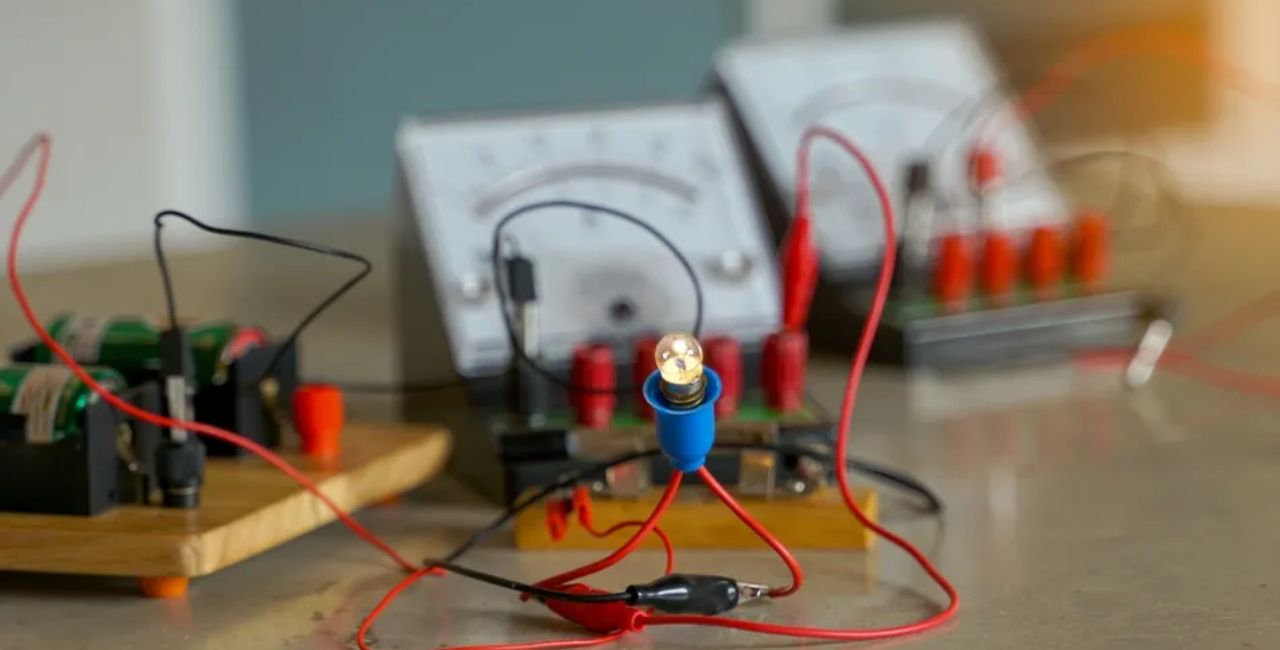
Electricity is one of the most transformative forces in human history, enabling everything from lighting our homes to powering complex machinery. At the heart of this lies the Electric Circuit Working Principle, which explains how electric current moves through a closed path to perform useful work. This principle governs the behavior of electrons as they travel from a power source through various components and back to complete the loop, ensuring continuous energy transfer without interruption. Understanding this foundation helps demystify how simple wires and switches create the sophisticated systems we rely on daily.
In this comprehensive article, we will explore every aspect of electric circuits in clear, accessible language. Whether you are a student beginning your studies, an engineer refining your knowledge, or simply someone curious about the technology around you, this guide offers practical insights backed by fundamental physics. We will cover basic concepts, essential components, governing laws, different circuit types, real-world applications, troubleshooting techniques, safety measures, and future trends. By the end, you will have a thorough grasp of how these systems operate reliably and efficiently.
Electricity itself stems from the movement of charged particles, primarily electrons in conductive materials like copper. When a potential difference, or voltage, exists between two points, electrons flow as current. A complete electric circuit provides the pathway for this flow, converting electrical energy into light, heat, motion, or data processing. Without a proper understanding of the Electric Circuit Working Principle, innovations in renewable energy, automation, and communication would not be possible.
Historical Development of Electric Circuit Concepts
The journey toward understanding electric circuits began centuries ago with early experiments in static electricity. Ancient civilizations observed lightning and amber’s attractive properties, but systematic study started in the 17th and 18th centuries. Scientists like William Gilbert and Benjamin Franklin laid groundwork by distinguishing between types of charge. The real breakthrough came with Alessandro Volta’s invention of the voltaic pile in 1800, the first practical battery that provided a steady source of direct current.
In the early 19th century, Georg Ohm formulated what we now know as Ohm’s Law, a cornerstone related keyword that relates voltage, current, and resistance. This law provided the mathematical framework essential for predicting circuit behavior. Later, Gustav Kirchhoff extended this with his voltage and current laws, enabling analysis of complex networks. These discoveries transformed electricity from a laboratory curiosity into a practical tool for industry and daily life.
By the late 1800s, Thomas Edison and Nikola Tesla advanced practical applications through direct current (DC) and alternating current (AC) systems. Edison’s work emphasized simple circuits for lighting, while Tesla’s AC approach allowed efficient long-distance power transmission. The 20th century saw the rise of semiconductors and integrated circuits, shrinking entire systems onto tiny chips. Today, the Electric Circuit Working Principle underpins everything from smartphones to power grids, evolving with digital technology and sustainable energy solutions.
Basic Components of an Electric Circuit
Every electric circuit consists of fundamental elements that work together according to the Electric Circuit Working Principle. Let’s examine them in detail.
Power Sources
The power source provides the energy that drives current flow. Common examples include batteries for DC circuits and generators or wall outlets for AC circuits. A battery creates voltage through chemical reactions, separating positive and negative charges. In contrast, AC sources like household electricity alternate direction rapidly, typically at 50 or 60 cycles per second.
Conductors and Wires
Conductors such as copper or aluminum wires offer low resistance paths for electrons. Their cross-sectional area and material affect how easily current flows. Insulators like rubber or plastic coatings prevent unintended current leakage, ensuring safety and efficiency.
Resistors
Resistors limit current flow and control voltage drops. They convert electrical energy into heat, following Ohm’s Law. Fixed resistors have constant values measured in ohms, while variable resistors like potentiometers allow adjustment for applications such as volume controls in audio devices.
Capacitors
Capacitors store electrical energy in an electric field between two plates separated by a dielectric material. They block DC but allow AC to pass, making them vital for filtering signals and timing circuits. Capacitance is measured in farads, with practical values often in microfarads or picofarads.
Inductors
Inductors, typically coils of wire, store energy in a magnetic field when current flows through them. They oppose changes in current, smoothing fluctuations in power supplies. Inductance is measured in henries and plays a key role in transformers and motors.
Switches and Protection Devices
Switches open or close the circuit path manually or automatically. For protection, fuses and circuit breakers interrupt flow during overloads or short circuits, preventing damage. In industrial settings, industrial circuit breakers provide robust safety mechanisms tailored for high-power environments.
Diodes and Transistors
Diodes allow current in one direction only, essential for rectification in power supplies. Transistors act as amplifiers or switches, forming the basis of modern electronics. These semiconductor devices revolutionized circuit design by enabling miniaturization.
Other components like sensors, relays, and integrated circuits expand functionality further. Each element interacts precisely according to the Electric Circuit Working Principle, ensuring the circuit performs its intended task reliably.
Fundamental Laws Governing Electric Circuits
Several laws define how circuits behave. Two related keywords stand out: Ohm’s Law and Kirchhoff’s Laws.
Ohm’s Law
Ohm’s Law states that voltage (V) equals current (I) multiplied by resistance (R), or V = I × R. This simple relationship allows engineers to calculate any one variable if the other two are known. For example, in a circuit with a 12-volt battery and a 6-ohm resistor, current equals 2 amperes. Real-world applications include designing safe lighting systems or sizing wires for appliances.
Kirchhoff’s Laws
Kirchhoff’s Current Law (KCL) asserts that the total current entering a junction equals the total current leaving it. This reflects conservation of charge. Kirchhoff’s Voltage Law (KVL) states that the sum of voltage rises equals the sum of voltage drops around any closed loop, embodying conservation of energy.
These laws, combined with Ohm’s Law, enable systematic circuit analysis even in complex networks. Engineers apply them to solve for unknown values using matrix methods or software tools in advanced designs.
Power and Energy Calculations
Power (P) in a circuit is calculated as P = V × I or P = I² × R. Understanding this helps optimize efficiency and prevent overheating. Energy consumption over time is power multiplied by time, measured in watt-hours or kilowatt-hours for billing purposes.
Types of Electric Circuits
Circuits come in various configurations, each with distinct characteristics based on the Electric Circuit Working Principle.
Series Circuits
In series circuits, components connect end-to-end along a single path. Current remains the same throughout, but voltage divides among components. Total resistance is the sum of individual resistances. A simple example is Christmas lights in older strings—if one bulb fails, all go out. Advantages include simplicity, but drawbacks involve vulnerability to single failures.
Parallel Circuits
Parallel circuits provide multiple paths for current. Voltage stays the same across branches, while current divides. Total resistance decreases as more branches are added. Household wiring uses parallel circuits so that one appliance can operate independently. This configuration enhances reliability and flexibility.
Series-Parallel Circuits
Most practical circuits combine series and parallel elements. For instance, a car’s electrical system might have parallel branches for lights and a series connection for certain sensors. Analysis requires breaking the circuit into sections and applying Kirchhoff’s Laws step by step.
Direct Current (DC) vs. Alternating Current (AC) Circuits
DC circuits maintain constant current direction, ideal for batteries and electronics. AC circuits reverse direction periodically, enabling efficient transmission over long distances via transformers. Power grids primarily use AC, while devices often convert it to DC internally.
Resonant Circuits
In AC circuits with inductors and capacitors, resonance occurs when inductive and capacitive reactances cancel, maximizing current at a specific frequency. This principle powers radio tuning and wireless charging.
Advanced Circuit Analysis Techniques
For intricate designs, engineers use nodal analysis, mesh analysis, and Thevenin’s or Norton’s theorems. These reduce complex networks to simpler equivalents. Computer simulation software like SPICE models behavior before physical construction, saving time and resources.
In digital circuits, logic gates process binary signals based on the same principles but with high-speed switching. Microcontrollers integrate thousands of such gates onto single chips, driving smart devices.
Real-World Applications of Electric Circuits
Electric circuits power countless aspects of modern life. In homes, they control lighting, heating, refrigeration, and entertainment systems. Automotive circuits manage engine ignition, safety features, and infotainment. Industrial automation relies on programmable logic controllers (PLCs) built from robust circuits.
Renewable energy systems use circuits to convert solar or wind power into usable electricity. For example, inverters transform DC from panels into AC for grid integration. Medical devices like pacemakers and MRI machines depend on precise circuit operation for patient safety.
In telecommunications, circuits process signals in routers, satellites, and fiber-optic networks. The electrical equipment suppliers for industrial circuit breakers play a vital role in selecting reliable components for large-scale projects, ensuring uninterrupted operation.
Transportation systems, from electric vehicles to high-speed trains, incorporate advanced power electronics. Smart grids use sensor-laden circuits to monitor and balance supply and demand dynamically.
Troubleshooting and Maintenance of Electric Circuits
Effective troubleshooting follows a systematic approach. Start by verifying power sources, then check connections, measure voltages and currents, and isolate faulty components. Tools like multimeters, oscilloscopes, and thermal cameras aid diagnosis.
Common issues include open circuits (no current), short circuits (excessive current), and ground faults. Preventive maintenance involves regular inspections, cleaning contacts, and replacing aging parts. In professional settings, adhering to standards minimizes downtime and hazards.
Safety Considerations in Working with Electric Circuits
Safety remains paramount when dealing with electricity. Always de-energize circuits before work, use insulated tools, and wear appropriate personal protective equipment. Understand lockout/tagout procedures for industrial environments.
Education on electrical hazards, including shock and arc flash risks, helps prevent accidents. Proper grounding and overcurrent protection devices safeguard both people and equipment. Following established guidelines ensures responsible use of the Electric Circuit Working Principle in all applications.
Educational Pathways and Career Opportunities
Aspiring engineers study circuit theory in physics and electrical engineering programs. Hands-on labs reinforce theoretical knowledge through breadboard experiments and simulations. Certifications in areas like programmable logic or renewable energy systems enhance employability.
Careers range from design engineers developing new products to technicians maintaining infrastructure. The field continues to grow with demand for expertise in electric vehicles, smart homes, and sustainable technologies.
Future Trends in Electric Circuit Technology
Emerging trends include flexible and printed electronics for wearable devices, quantum circuits for advanced computing, and bio-inspired designs mimicking neural networks. Integration with artificial intelligence allows self-monitoring and adaptive circuits.
Sustainable materials and energy-efficient components reduce environmental impact. Wireless power transfer and nanoscale circuits promise even smaller, more powerful systems. As global energy needs evolve, the Electric Circuit Working Principle will drive innovations toward a smarter, greener future.
For further insights into related technological advancements in infrastructure, consider exploring resources on civil engineering construction projects available through established platforms.
Detailed Examples and Case Studies
Consider a simple flashlight circuit: a battery, switch, resistor (to limit current for the bulb), and LED. Applying Ohm’s Law ensures the LED receives appropriate voltage without burning out. Scaling this up, a household lighting circuit uses parallel branches protected by circuit breakers.
In a more complex case, an audio amplifier circuit combines resistors, capacitors, and transistors to boost weak signals. Step-by-step analysis using KVL and KCL reveals how gain and frequency response are achieved.
Industrial motor control circuits employ relays, contactors, and variable frequency drives. These systems adjust speed and torque while protecting against overloads through integrated sensing.
Mathematical Foundations and Sample Problems
To deepen understanding, let’s solve a sample problem. Suppose a series circuit has a 9V battery, a 3Ω resistor, and a 6Ω resistor. Total resistance is 9Ω. Current I = 9V / 9Ω = 1A. Voltage across the first resistor is 3V, and across the second is 6V.
For a parallel example with two 4Ω resistors across 12V, equivalent resistance is 2Ω. Total current is 6A, splitting equally to 3A per branch.
These calculations illustrate the practical power of the governing laws.
Environmental and Sustainability Aspects
Modern circuit design emphasizes energy efficiency and recyclability. Low-power components reduce consumption in portable devices. Circuits in solar inverters maximize energy harvest, contributing to reduced carbon footprints. Responsible manufacturing and disposal practices align with global sustainability goals.
Conclusion
The Electric Circuit Working Principle remains the bedrock of electrical and electronic engineering, connecting fundamental physics to transformative technologies. From basic household wiring to cutting-edge innovations, these systems deliver reliable performance when designed and maintained with care.
This guide has provided a thorough exploration, equipping readers with knowledge to appreciate, analyze, and apply circuit concepts confidently. As technology advances, continued learning in this field will unlock new possibilities for progress and convenience in our daily lives.