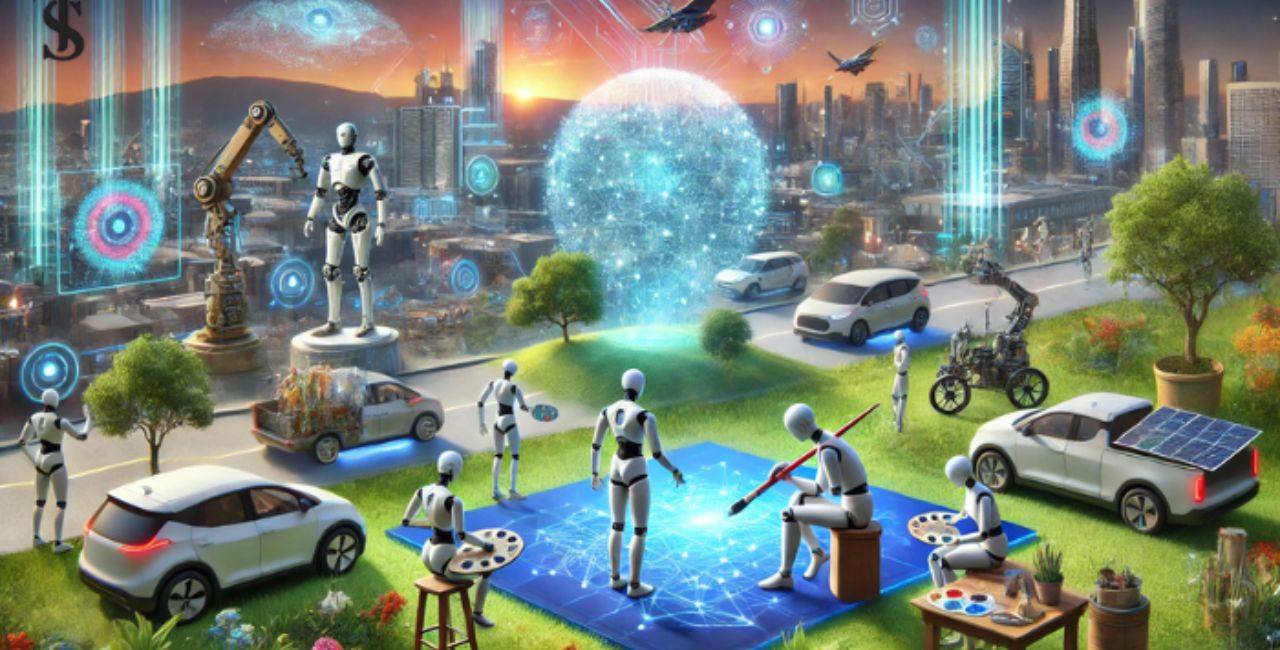
In today’s rapidly evolving digital landscape, Artificial Intelligence Technology stands as a beacon of progress, offering unprecedented opportunities for innovation and efficiency across various sectors. This powerful field combines advanced computing with human-like reasoning to solve complex problems, enhance productivity, and improve quality of life for people everywhere. As we navigate the opportunities and responsibilities of the modern era, understanding Artificial Intelligence Technology becomes essential for anyone interested in the future of work, education, healthcare, and sustainable development.
The Evolution and History of Artificial Intelligence Technology
The journey of Artificial Intelligence Technology began decades ago with visionary thinkers who dreamed of machines capable of intelligent behavior. Early concepts in the mid-20th century laid the groundwork through theoretical frameworks that explored how computers could mimic human thought processes. Pioneers like Alan Turing introduced ideas about machines that could perform tasks requiring intelligence, sparking global interest in creating systems that go beyond simple calculations.
By the 1950s and 1960s, researchers organized foundational conferences that formally established the field. These gatherings focused on symbolic reasoning and rule-based systems, where programs followed explicit instructions to solve logical puzzles or play basic games. Although limited by the computing power of the time, these efforts demonstrated that machines could handle structured tasks effectively.
The 1970s and 1980s brought periods of both excitement and setbacks, often referred to as “AI winters,” when funding decreased due to unmet expectations. However, persistent scientists continued refining approaches, shifting toward knowledge-based systems that stored vast amounts of information for expert decision-making. Industries began experimenting with these tools for practical uses, such as medical diagnosis support or industrial quality control.
Entering the 1990s and 2000s, breakthroughs in data availability and processing power accelerated progress. Statistical methods gained prominence, allowing systems to learn patterns from large datasets rather than relying solely on hand-coded rules. This era saw notable achievements, including systems that defeated world champions in complex strategy games, proving the potential of advanced pattern recognition.
The 2010s marked a significant turning point with the rise of big data and improved hardware. Neural network architectures, inspired by the human brain, enabled machines to process images, speech, and text with remarkable accuracy. Companies and research institutions invested heavily, leading to widespread adoption in consumer applications like virtual assistants and recommendation systems.
Today, in 2026, Artificial Intelligence Technology has matured into a mainstream force. It builds on decades of incremental improvements, incorporating global collaboration and open-source contributions. The history reflects not just technological advancement but also a growing emphasis on responsible development that prioritizes human benefit and ethical alignment.
Understanding How Artificial Intelligence Technology Functions
Artificial Intelligence Technology operates through a combination of algorithms, data, and computational resources designed to replicate and enhance cognitive functions. At its core, the technology processes input information, identifies patterns, makes predictions, and generates outputs that assist or automate decision-making. Unlike traditional programming, which requires explicit step-by-step instructions for every scenario, modern systems learn from examples and adapt over time.
This learning capability forms the foundation of effective implementations. Systems analyze historical data to improve performance without constant human intervention. For instance, a model trained on thousands of medical images can recognize subtle patterns that indicate health conditions, supporting doctors in early detection.
Core Principles Behind the Technology
Several fundamental principles guide the operation of these systems. Data serves as the fuel, providing the raw material for learning. High-quality, diverse datasets ensure reliable results across different contexts. Algorithms act as the engine, defining the mathematical methods for processing information. Common approaches include supervised learning, where models train on labeled examples, and unsupervised learning, which discovers hidden structures in unlabeled data.
Reinforcement learning adds another layer, where systems receive feedback from their environment and adjust actions to achieve better outcomes. This method proves particularly useful in dynamic settings, such as optimizing traffic flow in smart cities or managing energy consumption in buildings.
Machine Learning and Deep Learning as Key Drivers
Machine learning represents a vital subset that enables systems to improve automatically through experience. It encompasses various techniques tailored to specific needs. For example, classification algorithms sort data into categories, while regression models predict continuous values like temperature trends or crop yields.
Deep learning takes this further by using multi-layered neural networks. These structures, modeled after biological neurons, excel at handling unstructured data such as photographs, audio recordings, and natural language. Each layer extracts increasingly complex features, allowing the system to understand context and nuances that simpler models might miss.
In practice, deep learning powers applications from facial recognition in security systems to language translation services that bridge communication gaps worldwide. The combination of machine learning and deep learning has dramatically expanded what Artificial Intelligence Technology can achieve, making it accessible even for smaller organizations through cloud-based platforms.
Generative AI Tools and Their Role
Generative AI tools have emerged as particularly exciting developments. These systems create new content based on learned patterns, such as drafting reports, designing visual aids, or composing music. They support creative workflows while maintaining human oversight to ensure accuracy and relevance. For deeper insights into practical implementations, see this guide on boosting operational efficiency with generative AI.
Voice-related advancements also illustrate the technology’s versatility. Voice cloning technology helps in accessibility features, educational tools, and personalized communication aids, always with proper consent and ethical guidelines in mind.
Integration with Other Technologies
Artificial Intelligence Technology rarely works in isolation. It integrates seamlessly with Internet of Things devices, cloud computing, and robotics. Edge computing allows processing to occur closer to data sources, reducing latency and enhancing privacy. This synergy creates intelligent ecosystems where sensors feed information directly into analytical models for real-time responses.
Overall, the functioning of these systems emphasizes scalability, adaptability, and continuous improvement. Developers focus on building robust frameworks that prioritize transparency, so users understand how decisions are reached.
Key Related Technologies and Innovations
Beyond the basics, several related innovations enhance the capabilities of Artificial Intelligence Technology. Neural networks form the backbone of many advanced models, enabling sophisticated pattern recognition. These interconnected nodes process information in ways that mirror human learning, supporting tasks from image analysis to predictive maintenance in factories.
Natural language processing allows machines to understand and generate human speech and text. This breakthrough facilitates chat-based assistants that provide helpful information in multiple languages, making knowledge more accessible globally.
Computer vision equips systems to interpret visual data, powering applications in quality inspection, autonomous navigation, and environmental monitoring. Meanwhile, robotics combined with intelligence creates physical agents capable of performing hands-on tasks safely and efficiently.
In the context of digital services, secure implementations ensure user trust. Resources like guides on trusted halal apps and Islamic digital services highlight the importance of ethical frameworks in technology adoption.
These innovations continue to evolve, driven by research that balances performance with societal needs.
Practical Applications Across Sectors
Artificial Intelligence Technology finds meaningful applications in numerous fields, always aimed at enhancing human capabilities and addressing real-world challenges.
Transforming Healthcare Delivery
In healthcare, intelligent systems assist with diagnostic imaging analysis, identifying abnormalities faster than traditional methods. Predictive models forecast disease outbreaks or patient risks, enabling proactive care. Personalized treatment plans consider individual genetics and lifestyle factors, improving outcomes while reducing unnecessary procedures.
Telemedicine platforms use these tools to triage patients and provide initial consultations, extending reach to remote areas. Overall, the focus remains on supporting medical professionals rather than replacing them.
Enhancing Education and Lifelong Learning
Education benefits from adaptive learning platforms that tailor content to each student’s pace and style. Intelligent tutors offer instant feedback on assignments, while analytics help teachers identify areas needing extra attention. Language learning apps use speech recognition for pronunciation practice, and virtual simulations create immersive experiences for complex subjects.
These tools promote inclusive education, accommodating diverse needs and making quality learning available worldwide.
Supporting Agriculture and Environmental Sustainability
In agriculture, particularly relevant in regions like Punjab with its rich farming heritage, systems monitor soil conditions, predict weather impacts, and optimize irrigation. Drone-based imaging combined with analysis detects crop diseases early, minimizing losses and promoting sustainable practices.
Environmental applications include climate modeling and wildlife protection, where sensors track pollution levels or animal movements to inform conservation efforts.
Revolutionizing Manufacturing and Business Operations
Manufacturing sees efficiency gains through predictive maintenance that prevents equipment failures. Supply chain optimization reduces waste and improves delivery times. In business, intelligent analytics provide insights for better resource allocation and customer service enhancements.
For those interested in workforce dynamics amid technological shifts, discussions around the local tech scene underscore the need for upskilling and adaptation strategies.
Additional Sectors Benefiting from Adoption
Other areas include transportation safety through smart traffic management and energy optimization for greener grids. The versatility ensures broad positive impact when implemented thoughtfully.
Advantages of Embracing Artificial Intelligence Technology
The benefits extend far beyond automation. Productivity increases as routine tasks free up time for creative and strategic work. Innovation accelerates with rapid prototyping and data-driven discoveries. Accessibility improves for people with disabilities through assistive features like real-time captioning or navigation aids.
Economic growth follows as new industries emerge around intelligent solutions. Environmental advantages arise from optimized resource use, contributing to sustainability goals. On a societal level, these advancements foster collaboration across borders, sharing knowledge and solutions for common challenges.
Potential Challenges and Ethical Considerations
Despite the promise, responsible development requires addressing challenges openly. Data privacy stands as a priority, with systems designed to protect sensitive information. Bias in training data can lead to unfair outcomes, necessitating diverse datasets and regular audits.
Job displacement concerns call for reskilling programs that prepare individuals for new roles alongside technology. Transparency in decision-making builds public trust, as users deserve to know how systems arrive at conclusions.
Ethical frameworks emphasize human oversight, ensuring technology serves humanity without causing harm. International cooperation helps establish standards that promote fairness and accountability across cultures.
Future Outlook and Emerging Trends in 2026 and Beyond
Looking ahead to 2026 and the years following, several trends define the next phase of Artificial Intelligence Technology. Agentic systems gain prominence, acting autonomously to complete multi-step tasks while remaining aligned with user goals. Edge AI brings processing power directly to devices, enabling faster responses and greater privacy in everyday applications.
Physical AI integrates intelligence into robots and embodied agents for real-world interactions in homes, factories, and public spaces. AI factories scale computational resources efficiently, supporting larger models and broader adoption.
Domain-specific models tailor capabilities to industries like agriculture or healthcare, delivering precise results. Hybrid approaches combine strengths of different techniques for more robust performance.
For foundational reading on these concepts, explore the Wikipedia page on Artificial Intelligence.
Sustainability becomes central, with energy-efficient designs reducing the environmental footprint. Multimodal systems that process text, images, video, and audio together create richer user experiences. Governance evolves through global guidelines that balance innovation with safety.
These developments point toward a future where Artificial Intelligence Technology acts as a collaborative partner, amplifying human potential while respecting values and diversity.
Conclusion
Artificial Intelligence Technology represents one of the most significant advancements of our time, with the power to drive positive change across every aspect of society. Through its evolution, practical applications, and forward-looking innovations, it offers tools for solving pressing issues and unlocking new possibilities. By approaching development with ethics, inclusivity, and a focus on human benefit, we can ensure this technology contributes to a brighter, more equitable world.
Continued learning and thoughtful engagement will help individuals and communities harness its full potential. As we move forward together, the emphasis remains on collaboration, responsibility, and the shared goal of advancing humanity through intelligent progress.