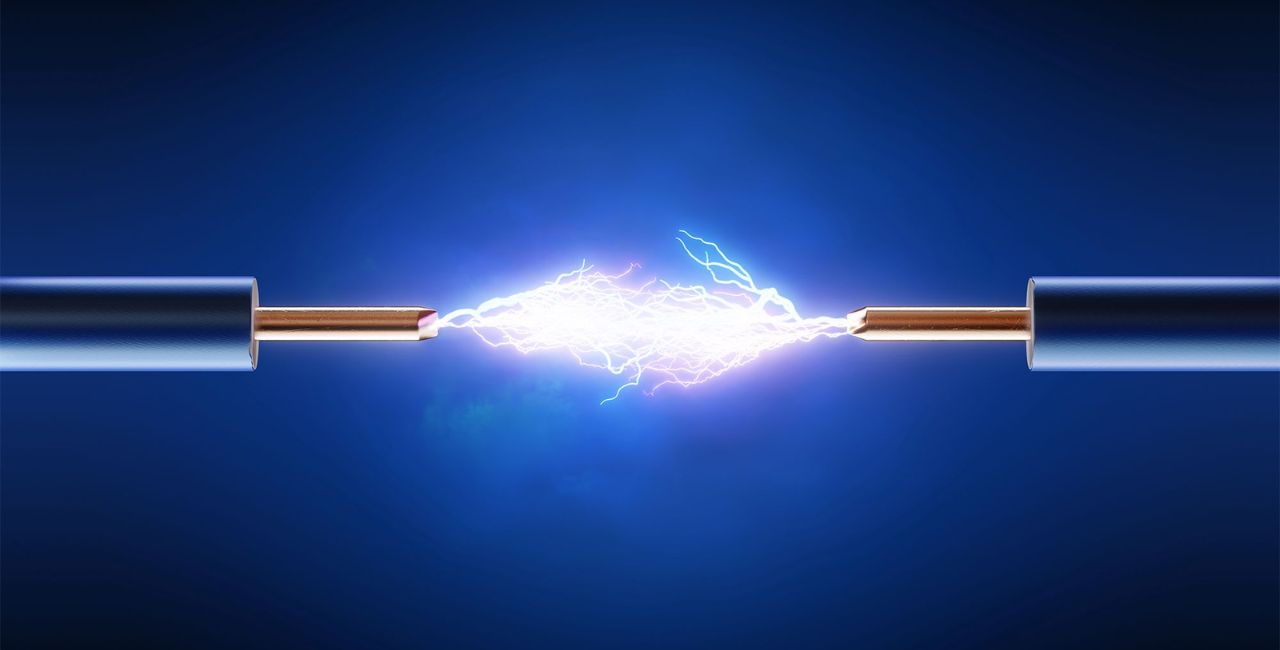
Electricity and Magnetism Basics form the foundation of modern physics and technology that powers our daily lives. From the light bulb illuminating your room to the smartphone in your hand, these invisible forces shape everything around us. This comprehensive article explores the core ideas step by step, using simple language, real-life examples, and clear explanations so anyone can grasp the concepts without feeling overwhelmed.
Introduction to Electricity
Electricity is the flow of electric charge through materials. At its heart lies the concept of electric charge, a fundamental property of matter carried by tiny particles called electrons and protons. Electrons carry a negative charge while protons carry a positive one. Like charges repel each other, and opposite charges attract—this simple rule governs much of the behavior we observe in nature.
Think of charge as similar to money in an economy: positive and negative balances interact to create movement. An object becomes charged when it gains or loses electrons. For instance, rubbing a balloon on your hair transfers electrons, making the balloon negatively charged and causing it to stick to a neutral wall due to attraction.
Electric Current and Circuits
Electric current is the rate at which charge flows through a conductor, usually measured in amperes (A). In metals like copper wires, free electrons drift when pushed by an electric field. This flow requires a complete path called a circuit. A simple circuit includes a power source (battery), wires, and a load (light bulb).
Direct current (DC) flows in one direction, as from a battery, while alternating current (AC) reverses direction periodically, which is what powers most homes. Understanding these differences helps explain why certain devices need specific power supplies.
Voltage, Resistance, and Ohm’s Law
Voltage, or electric potential difference, is the “pressure” that drives current, measured in volts (V). Resistance opposes the flow of current and is measured in ohms (Ω). The relationship between these is beautifully captured by Ohm’s Law:
V=IR V = IR
where V V is voltage, I I is current, and R R is resistance. This equation is one of the first tools students learn because it predicts how circuits behave. For example, increasing resistance while keeping voltage constant reduces current, which is why dimmer switches work by varying resistance.
Materials are classified as conductors (low resistance, like metals), insulators (high resistance, like rubber), or semiconductors (in between, used in electronics). Real-world factors such as temperature affect resistance—most metals increase resistance when heated because atoms vibrate more, colliding with electrons.
Safety is crucial when working with electricity. Always respect high voltages, use insulated tools, and never overload circuits to prevent fires. These basics prevent accidents and build confidence for hands-on learning.
Understanding Magnetism
Magnetism arises from the motion of electric charges. Every magnet has two poles: north and south. Like poles repel, and unlike poles attract, mirroring the behavior of electric charges but with magnetic fields instead of electric ones.
A magnetic field is the region around a magnet where magnetic forces act. You can visualize it using iron filings sprinkled near a bar magnet—they align along invisible field lines emerging from the north pole and entering the south pole.
Magnetic Materials and Domains
Not all materials respond to magnets the same way. Ferromagnetic materials like iron, nickel, and cobalt have tiny regions called magnetic domains where atomic magnets align. In an unmagnetized piece of iron, these domains point randomly, canceling each other out. When exposed to a strong field, domains align, turning the material into a magnet. This property explains permanent magnets and temporary ones used in electromagnets.
Earth itself acts as a giant magnet with its own magnetic field, protecting us from harmful solar radiation and guiding compass needles. The field is not perfectly aligned with geographic poles, which is why magnetic north differs slightly from true north—a detail important for navigation.
The Interconnection: Electricity and Magnetism Basics
Electricity and Magnetism Basics reveal that these two phenomena are deeply linked, forming the unified theory of electromagnetism. A moving electric charge creates a magnetic field, and a changing magnetic field can produce an electric current. This mutual relationship powers generators, motors, transformers, and countless devices.
Consider a simple wire carrying current: it generates a circular magnetic field around it, following the right-hand rule—if you point your thumb in the direction of current, your fingers curl in the direction of the magnetic field lines. This principle underlies electromagnets used in cranes to lift heavy metal objects.
Fundamental Laws and Principles
Several key laws describe these interactions precisely.
Coulomb’s Law
Coulomb’s Law quantifies the force between two point charges:
F=kq1q2r2 F = k \frac{q_1 q_2}{r^2}
Here, F F is the force, q1 q_1 and q2 q_2 are charges, r r is the distance, and k k is Coulomb’s constant. The inverse-square dependence means force drops rapidly with distance, explaining why charged objects affect each other strongly only when close.
Ampère’s Law and Biot-Savart Law
Ampère’s Law relates magnetic fields to electric currents. In integral form:
∮B⋅dl=μ0Iencl \oint \mathbf{B} \cdot d\mathbf{l} = \mu_0 I_{encl}
where B \mathbf{B} is the magnetic field, μ0 \mu_0 is the permeability of free space, and Iencl I_{encl} is the current enclosed by the path. This law helps calculate fields around wires and solenoids.
Faraday’s Law of Electromagnetic Induction
Faraday’s Law states that a changing magnetic flux induces an electromotive force (EMF):
E=−dΦBdt \mathcal{E} = -\frac{d\Phi_B}{dt}
The negative sign (Lenz’s Law) indicates the induced current opposes the change in flux, conserving energy. This discovery revolutionized industry by enabling electric generators.
Maxwell’s Equations: The Complete Picture
James Clerk Maxwell unified electricity and magnetism into four elegant equations that describe all classical electromagnetic phenomena, including light as an electromagnetic wave. These equations predict radio waves, microwaves, and more, forming the basis of modern communication technologies.
Electromagnetic Induction and Its Applications
Electromagnetic induction is the process of generating electricity from magnetism. When a coil rotates in a magnetic field or a magnet moves near a coil, current is induced. This principle powers hydroelectric dams, wind turbines, and even the alternator in your car.
Transformers use induction to step voltage up or down without moving parts. High-voltage transmission lines reduce energy loss over long distances, making electricity distribution efficient. Without induction, large-scale power grids would be impossible.
Historical Perspectives and Key Scientists
The journey to understand Electricity and Magnetism Basics spans centuries. Ancient Greeks noticed amber attracting dust when rubbed—hence the word “electricity” from Greek elektron. In the 17th century, William Gilbert studied magnetism systematically.
Benjamin Franklin’s kite experiment linked lightning to electricity, leading to the lightning rod. Hans Christian Ørsted discovered that electric current deflects a compass needle, proving the connection. Michael Faraday’s experiments laid groundwork for generators and motors. James Clerk Maxwell’s mathematical synthesis in the 1860s completed the theory, later confirmed by Heinrich Hertz’s production of radio waves.
These pioneers turned curiosity into practical inventions that transformed society, from the Industrial Revolution to today’s digital age.
Practical Experiments You Can Try at Home
Hands-on learning reinforces concepts safely.
Build a simple electromagnet
Wrap insulated wire around a nail and connect to a battery. The nail attracts paper clips when current flows—demonstrating magnetic fields from moving charges.
Lemon battery
Insert copper and zinc electrodes into lemons to generate small voltage, lighting a tiny LED. This shows chemical energy converting to electrical energy.
Compass and current
Place a compass near a wire carrying current from a battery to observe deflection, illustrating Ørsted’s discovery.
Induction demo
Move a magnet in and out of a coil connected to a multimeter to measure induced voltage.
Always prioritize safety—use low voltages and adult supervision for younger learners. These experiments build intuition better than textbooks alone.
Real-World Applications in Technology and Industry
Electricity and magnetism power modern life. Electric motors convert electrical energy into motion using magnetic forces—found in fans, refrigerators, and electric vehicles. Generators do the reverse.
In medicine, magnetic resonance imaging (MRI) uses strong magnetic fields and radio waves to image the body without harmful radiation. Telecommunications rely on electromagnetic waves for radio, TV, and mobile signals.
Renewable energy sources like solar panels produce DC electricity, converted to AC via inverters based on electromagnetic principles. To explore practical electrical components used in construction and industry, check out this related guide on choosing the best electrical equipment suppliers.
For students seeking additional free educational resources to deepen understanding of science topics, consider free educational resources for students and lifelong learners.
Emerging technologies such as magnetic levitation trains (Maglev) use powerful electromagnets for frictionless travel. Future innovations in energy storage and quantum computing also build on these basics. Stay updated on cutting-edge developments by reading about new tech innovations ready for 2026.
Common Misconceptions Debunked
Many myths persist. Electricity does not “flow” like water inside wires; electrons drift slowly while the electric field propagates near light speed. Magnets do not run out of energy—they rearrange domains but conserve energy overall.
Another misconception: grounding prevents shocks by providing a low-resistance path for fault current, not by “absorbing” electricity. Understanding these clarifies safety practices and scientific literacy.
Advanced Topics for Deeper Understanding
Once comfortable with basics, explore capacitors and inductors storing energy in electric and magnetic fields. AC circuit analysis uses phasors and impedance. Relativity connects electromagnetism further, as magnetic fields arise from relativistic effects of moving charges.
For those interested, textbooks like Electricity and Magnetism by Edward Purcell provide rigorous treatment. Online simulations from PhET Interactive Simulations let you experiment virtually with fields and circuits.
Conclusion
Mastering Electricity and Magnetism Basics opens doors to careers in engineering, physics, renewable energy, and electronics. These principles not only explain natural phenomena like lightning and auroras but also drive innovations that improve quality of life while promoting sustainable development.
Continue learning by practicing calculations, building projects, and staying curious. The invisible forces of electricity and magnetism quietly power our world—understanding them empowers you to shape the future responsibly and creatively.